Record-Level Profitability Masks Persistent Credit Portfolio Challenges
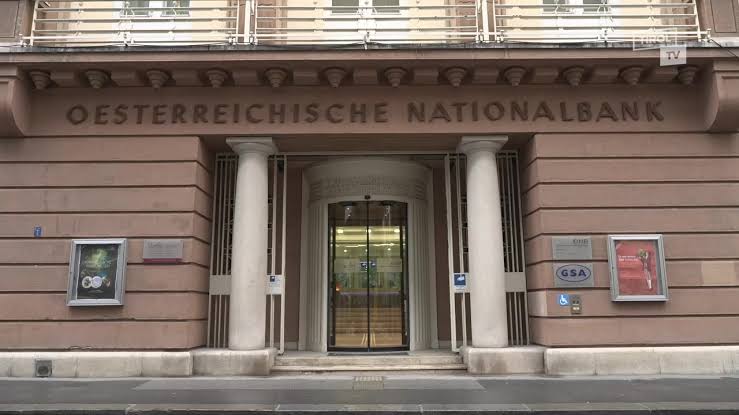
The Oesterreichische Nationalbank (OeNB) has urged Austrian banks to accelerate the resolution of non-performing loans, warning that ageing problem exposures increasingly consume capital despite the banking sector's strong profitability and financial resilience.
In its 52nd Financial Stability Report, published on 11 November 2026, Austria's central bank highlighted the limited progress achieved in resolving legacy problem loans accumulated following the end of the low interest rate environment.
The Austrian banking sector generated €9.3 billion in profit during the first half of 2026, supported by substantial non-recurring income, participation revaluations and expansion in Poland. Operations across Central, Eastern and Southeastern Europe (CESEE) contributed €3.3 billion.
Nevertheless, the improvement in headline profitability has not been accompanied by a corresponding reduction in outstanding non-performing exposures.
Stable NPL Ratios Conceal Increasing Absolute Exposures
Despite the stabilization of the aggregate NPL ratio below 3%, the outstanding volume of problem loans has continued to increase.
Austrian Banking Sector: Selected Financial and Risk Indicators
|
Indicator |
Reported position |
|
H1 2026 banking sector profit |
€9.3bn |
|
CESEE business contribution |
€3.3bn |
|
Aggregate NPL ratio |
Below 3% |
|
Banks reporting NPL ratios above 5% |
56 |
|
Total banks in referenced population |
314 |
|
Asset share of banks with NPL ratios above 5% |
Approx. 9% |
|
Domestic CRE loan NPL ratio |
Above 8% |
|
Current CRE sectoral systemic risk buffer |
2.0% |
|
Fully phased-in CRE buffer |
3.5% |
Source: Oesterreichische Nationalbank, Financial Stability Report 52, November 2026.
The distinction between relative and absolute asset quality indicators is particularly relevant following the expansion of Austrian banking groups through acquisitions. Growth in performing exposures can stabilise or reduce reported NPL ratios without necessarily improving recoveries from existing distressed portfolios.
For bank management, the ageing structure of non-performing exposures may consequently provide a more meaningful indication of workout effectiveness than the headline NPL ratio alone.
Commercial Real Estate Remains a Supervisory Priority
Domestic commercial real estate financing remains one of the principal areas of concern, with the respective NPL ratio exceeding 8%.
According to the central bank's commercial property price index, Austrian commercial property values declined by approximately 10% between the interest rate reversal in 2022 and the end of 2024 before broadly stabilising.
The sectoral systemic risk buffer applicable to relevant CRE exposures increased to 2% in July 2026 and is scheduled to reach 3.5% by mid-2027. This creates an additional regulatory capital requirement for affected institutions.
Beyond regulatory compliance, banks face the practical challenge of determining whether existing exposures can be sustainably restructured or whether collateral enforcement, negotiated settlements and portfolio disposals would provide more favourable recovery outcomes.
Prolonged NPL Retention Carries an Economic Cost
Retaining distressed exposures on bank balance sheets for extended periods can generate substantial direct and indirect costs. In addition to impairment requirements, banks must allocate workout resources, incur legal and servicing expenses and maintain regulatory capital against exposures that may generate limited recoverable income.
The appropriate recovery strategy should therefore be assessed against the net present value of expected recoveries rather than nominal outstanding balances or historical collateral valuations.
A negotiated restructuring may maximise recovery where the underlying borrower remains economically viable. Conversely, where sustainable repayment capacity cannot be restored, prolonged maturity extensions may merely postpone the recognition of economic losses and reduce the value available to creditors.
The current profitability of Austrian banks provides financial capacity to absorb potential losses associated with more decisive NPL resolution, including additional provisioning or discounted portfolio disposals where economically justified.
Strong Capitalization Creates an Opportunity for Balance-Sheet Clean-Up
The OeNB's assessment does not indicate a systemic solvency concern. Its latest stress testing supports the overall resilience of Austria's banking sector under adverse economic conditions.
However, the combination of strong capitalisation and substantial reported earnings presents an opportunity to address legacy distressed exposures before a deterioration in economic conditions potentially reduces recovery prospects.
For Austrian banking groups operating across CESEE markets, efficient NPL resolution remains relevant not only from a regulatory perspective but also as a means of releasing management resources, improving capital allocation and supporting new corporate lending.
The next phase of asset quality improvement will depend less on movements in aggregate NPL ratios and more on the banking sector's ability to achieve economically sustainable recoveries from its existing stock of problem loans.
Editorial Disclaimer
This article is based on publicly available regulatory publications and financial stability assessments as at 25 November 2026. Financial figures and supervisory observations are principally derived from the Oesterreichische Nationalbank's 52nd Financial Stability Report.
References to potential NPL resolution strategies, provisioning requirements and capital efficiency represent independent analytical considerations. The article does not allege inadequate provisioning, regulatory breaches or undisclosed financial weaknesses at any individual banking institution.
This publication provides independent financial information and analysis and does not constitute investment advice.
Sources and References
1. Oesterreichische Nationalbank, 11 November 2026. Financial Stability Report 52.
https://www.oenb.at/daten-und-forschung/publikationen/publikationsreihen/oenb-report/financial-stability-report/2026/financial-stability-report-52.html
2. Oesterreichische Nationalbank, 11 November 2026. OeNB: Banking Sector Resilient, but Determined NPL Reduction Is Important.
https://www.oenb.at/en/news-und-events/presse/presseaussendungen/2026/20261111.html