A Failed Luxury Development Becomes a Cross-Border Recovery Dispute
Nearly a decade after it was presented as one of Croatia's most ambitious luxury tourism investments, the proposed Four Seasons resort on the island of Hvar has become the subject of a complex legal dispute involving international arbitration, enforcement proceedings and competing claims over the project's real estate. Four Seasons is seeking to recover amounts awarded following the termination of agreements with the developers, while separate proceedings before Croatian courts challenge the legal effect of two mortgages, each securing claims of €60 million, registered over land associated with the development.
The financial institution behind the original investment was Arqaam Capital, a Dubai-headquartered investment banking and financial services group operating from the Dubai International Financial Centre. Arqaam was publicly identified as the project's investment sponsor, with the development structured through companies registered in Croatia and offshore jurisdictions. Its involvement is particularly relevant because the dispute extends beyond an unsuccessful hotel development into questions of creditor protection, the enforceability of security interests and the potential recovery value of a substantial coastal property.
Although the proceedings have attracted attention because of the Four Seasons brand, the underlying financial questions are more consequential. The arbitration established contractual liabilities, but the eventual recovery will depend on the assets available to satisfy those claims and the legal position of other parties asserting rights over the same property. The mortgages registered shortly after the arbitration award have consequently become a central feature of the dispute.
From a €224 Million Investment Plan to an Uncompleted Resort
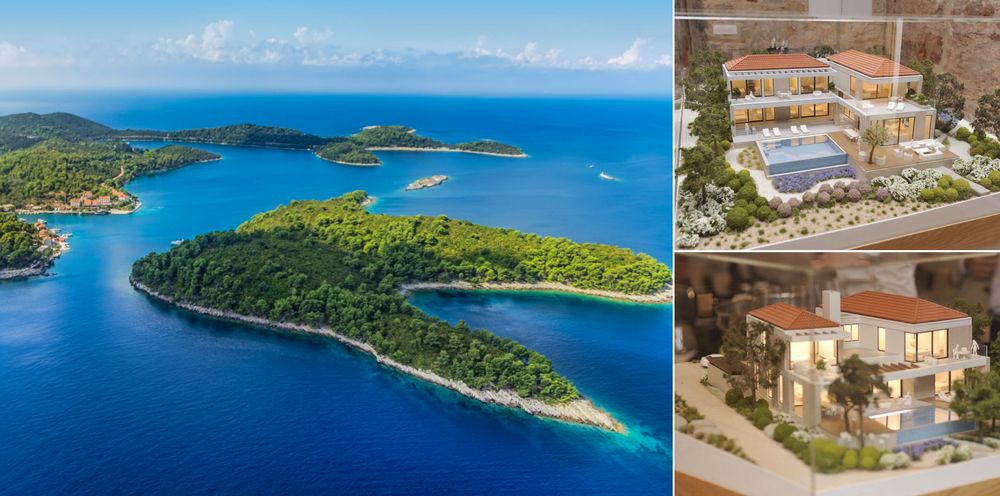
The Four Seasons Resort and Private Residences Hvar was planned for Brizenica Bay, near Stari Grad on the island's northern coast. The proposed development included a 120-room luxury hotel, 99 residential units and supporting leisure facilities, positioning the project among the more substantial planned hospitality investments in Croatia. When Croatian authorities publicly presented the development in June 2017, they described an investment approaching HRK 1 billion, while subsequent International Finance Corporation documentation estimated total development costs at approximately €224 million.
The IFC documentation contemplated a financing structure consisting of roughly equal proportions of debt and equity, with a proposed financing package of approximately €100 million. That distinction is important: the available documentation describes an intended financing arrangement and does not, by itself, establish that IFC or another institution ultimately disbursed the proposed funds. The amounts should therefore not be treated as evidence of outstanding project debt or as a basis for calculating the investment's realised financial losses.
The project was promoted with the involvement of established international hospitality and engineering partners, but it never reached completion. Engineering documentation published by Tering, one of the firms involved, refers to changes in the development concept, infrastructure requirements and delays affecting implementation. These factors provide some context for the difficulties encountered, although the available public record does not establish a complete chronology of the project's financial and operational deterioration.
For an investment of this nature, the absence of an operating hotel does not necessarily mean that the underlying assets have lost their value. Coastal development land may retain significant market potential, particularly where substantial planning and preparatory work has been undertaken. Its realisable value, however, depends on the current permitting position, development restrictions, infrastructure obligations, legal encumbrances and the willingness of prospective investors to assume the costs and risks associated with completing or redesigning the project.
Arqaam Capital and the Investment Structure
Arqaam Capital's involvement is documented in its own historical announcements, Croatian government communications and international development financing materials. The Dubai-based group acted as an investment sponsor rather than merely appearing as an external financial adviser to the developers. The Croatian project company, Brizenica d.o.o., was linked to an ownership structure involving ProCro Acquisitions Limited and other entities associated with the investment, including companies registered in the Cayman Islands and Malta.
This distinction is particularly relevant when assessing the financial exposure of the parties involved. Arqaam Capital's role as an investment sponsor does not establish that it was the project's secured lender, nor does it demonstrate that the development constitutes a non-performing bank loan on Arqaam's balance sheet. Equity investments, shareholder financing, related-party loans and third-party bank debt have different legal and economic characteristics, especially when a project fails and creditors seek recovery from its remaining assets.
The public documentation examined identifies the companies involved in the investment and subsequent litigation, but it does not provide a complete, independently verified reconstruction of the project's funding history. The amount of capital ultimately invested, the extent of any external borrowing and the present economic exposure of Arqaam Capital remain insufficiently established. Those limitations are important because the financial consequences for the investment sponsor cannot be inferred from the project's original estimated cost or the nominal value of security interests registered over its property.
The Arbitration Award and Four Seasons' Recovery Efforts
The dispute originated in agreements entered into in 2015 concerning the proposed hotel and residential development. Brizenica and ProCro Acquisitions subsequently initiated arbitration against three Four Seasons entities, challenging the termination of contractual arrangements associated with the project. The proceedings were conducted under International Chamber of Commerce rules, with London as the seat of arbitration, and culminated in a final award dated 1 May 2025.
The tribunal rejected the developers' claims and found that the relevant Four Seasons entities had validly terminated the pre-opening and hotel agreements. It also determined that the residential agreements were not valid and binding. The award gave rise to substantial cost obligations, with Croatian business publication Lider reporting that Four Seasons is pursuing recovery of more than £5 million, together with additional amounts and interest.
The subsequent enforcement process has involved proceedings in Croatia and the Cayman Islands. On 30 July 2026, the Commercial Court in Zagreb issued a decision recognising the foreign arbitral award, while a separate Croatian enforcement proceeding against Brizenica was stayed pending the final resolution of the recognition proceedings or the removal of the grounds for the stay. The available documents establish the existence of these proceedings, but they do not confirm that Four Seasons has recovered the amounts claimed or establish the final outcome of every enforcement step.
From a creditor recovery perspective, obtaining an arbitral award is only one stage of the process. A successful claimant must still identify assets against which enforcement can proceed, establish the applicable legal rights and determine whether other creditors hold security interests that may affect the distribution of proceeds. In cross-border disputes involving multiple corporate entities, those questions can be considerably more difficult than establishing the underlying contractual liability.
Two €60 Million Mortgages and the Question of Creditor Priority
A separate proceeding initiated by the Four Seasons entities in November 2025 introduces what may be the most significant financial dimension of the dispute. According to a ruling issued by the Commercial Court in Zagreb on 14 January 2026, Four Seasons is challenging the legal effect of two mortgage agreements dated 29 May 2025, both relating to land owned by Brizenica. The agreements concern 77 land parcels associated with the project and secure claims with an aggregate nominal value of €120 million.
The first mortgage, registered in first-ranking position, secures a €60 million claim in favour of Malta-based Dalmatia Projects Holdings Limited. The second, registered in second-ranking position, secures another €60 million claim in favour of Cayman Islands-based Brizenica Bay Investors Limited. Both agreements were dated 28 days after the ICC tribunal issued its final arbitration award, a chronology that is relevant to the legal challenge but does not, on its own, establish that the mortgages were created improperly.
Four Seasons is seeking a determination that the mortgage agreements have no legal effect against the claimants to the extent necessary to satisfy their claims. This is a narrower proposition than a general declaration that the mortgages are invalid or that the obligations they secure do not exist. The available court ruling records the claimants' position and addresses jurisdiction; it does not establish that the mortgages were fraudulent, fictitious or otherwise unlawful.
The Zagreb court concluded that the dispute should fall within the territorial jurisdiction of the Commercial Court in Split because it concerns rights over real estate situated within that court's jurisdiction. It did not resolve the substantive dispute over the mortgages. The current status of the proceedings before the competent court, including any subsequent decisions on the merits, requires further verification.
The aggregate €120 million figure also requires careful interpretation. It represents the nominal amount of claims secured by the two mortgages, not independently verified outstanding debt of €120 million. The actual obligations, any amounts advanced, repayments, accrued interest and the economic relationships between the companies involved cannot be determined from the mortgage amounts alone. Treating the registered security as proof of an equivalent outstanding financial liability would materially overstate what the public evidence establishes.
Nevertheless, the security interests could have important consequences for recovery. If the mortgages remain valid and enforceable, their registered priority may affect how proceeds from any sale of the encumbered property are distributed. If Four Seasons succeeds in its challenge, the legal position could change to the extent determined by the court. The financial implications therefore depend not only on the amount of the arbitration claim but also on the legal treatment of the mortgages and the realisable value of the underlying land.
What Can Actually Be Recovered?
The Hvar case illustrates a familiar problem in distressed asset recovery: the amount of a legally recognised claim may bear little relationship to the cash ultimately collected. Even where a creditor has obtained a favourable arbitral award, recovery depends on the value and accessibility of the debtor's assets, the existence of competing claims and the costs and duration of enforcement. Those considerations become particularly important when the principal asset is undeveloped or partially developed real estate rather than an operating business generating recurring cash flow.
The underlying Brizenica property may retain commercial value, but a reliable assessment would require current land registry information, an independent valuation, confirmation of the project's planning and permitting status and a complete schedule of secured and unsecured liabilities. It would also be necessary to establish whether the relevant land could be sold as a single development opportunity or whether legal, infrastructure or planning constraints would limit its marketability. Without those inputs, any estimate of a recovery rate would be speculative.
The distinction between a project's historical investment cost and its present recovery value is equally important. The estimated €224 million development cost reflected a proposed investment programme, not the amount necessarily spent or the value of assets remaining today. Similarly, the registered €120 million in mortgage security does not establish the amount that would be payable to secured creditors following an enforcement sale. Both figures provide context, but neither is a substitute for a verified assessment of current assets and liabilities.
The proceedings also demonstrate why the corporate structure matters. Where ownership, contractual obligations and security interests extend across several jurisdictions, a claimant may need to pursue recognition, enforcement and related legal remedies in more than one country. That can increase costs and prolong recovery, even when the underlying contractual dispute has already been resolved through arbitration.
A Cross-Border Investment Dispute With Wider Implications
What began as a high-profile luxury hospitality investment has developed into a dispute involving a Dubai-based investment banking group, offshore holding companies, a Croatian project company, an international hotel operator and several judicial proceedings. The failure to complete the resort is the commercial background, but the current dispute concerns the enforceability of contractual claims and the priority of rights over the remaining assets.
For Four Seasons, the central issue is whether the arbitration award can be converted into meaningful financial recovery. For the companies associated with the original investment, the proceedings concern contractual liabilities and the legal treatment of security interests registered over the development land. For prospective investors or creditors considering the property, the unresolved legal position may be as important as the site's physical characteristics or long-term development potential.
The available evidence does not establish that Arqaam Capital is insolvent, that the development represents a classified bank NPL or that any party has engaged in unlawful conduct. It does, however, demonstrate how a failed cross-border real estate investment can evolve into a complicated creditor recovery process in which the order of security interests and the enforceability of claims become central to the financial outcome.
The remaining question is not simply how much Four Seasons is owed, but how much value can ultimately be recovered from the assets and which claims will have priority over that value. Until the mortgage dispute is resolved and the project's current financial position is established, the answer remains uncertain.
Editorial Disclaimer
This article is based on publicly available court decisions, arbitration records, project documentation and published reporting. Allegations made by parties in legal proceedings are distinguished from established judicial findings. The existence of registered mortgages does not independently establish the amount of outstanding debt, and proposed project financing is not presented as confirmed disbursement. No allegation of misconduct is made against any party. This article is intended for informational and analytical purposes and does not constitute investment or legal advice.
As at the publication date, the author holds no direct or indirect financial interests in the companies discussed in this article.
Sources and References
1. Commercial Court in Zagreb, Case P-2692/2025, ruling of 14 January 2026. Court proceedings concerning the challenge to two €60 million mortgages and territorial jurisdiction.
https://www.zakon.hr/c/sudska-praksa/885623/p-2692-2025-3---trgovacki-sud-u-zagrebu
2. Commercial Court in Zagreb, Case R1-207/2025-13, 30 July 2026. Proceedings concerning recognition of the ICC arbitral award.
https://www.zakon.hr/c/sudska-praksa/1412994/r1-207-2025-13---trgovacki-sud-u-zagrebu
3. Commercial Court in Zagreb, Case Ovr-72/2026, 30 July 2026. Enforcement proceedings involving Brizenica d.o.o.
https://www.zakon.hr/c/sudska-praksa/1412993/ovr-72-2026-1---trgovacki-sud-u-zagrebu
4. Jus Mundi, Brizenica d.o.o. and ProCro Acquisitions Limited v. Four Seasons entities, ICC Case 27321. International arbitration documentation.
https://jusmundi.com/en/document/decision/en-brizenica-d-o-o-and-procro-acquisitions-limited-v-four-seasons-hotels-limited-fs-zagreb-b-v-and-four-seasons-hotels-and-resorts-b-v-final-award-thursday-1st-may-2025
5. Lider, 20 November 2026. Reporting on Four Seasons' enforcement actions concerning the Hvar development.
https://old.lidermedia.hr/tvrtke-i-trzista/four-seasons-pokrenuo-ovrhe-nad-imovinom-nesudenog-resorta-na-hvaru/
6. Croatian Ministry of Tourism, 14 June 2017. Announcement of the proposed Four Seasons Resort and Private Residences Hvar investment.
https://mint.gov.hr/vijesti/four-seasons-resort-and-private-residences-investicija-od-gotovo-milijardu-kuna-pocinje-krajem-2017-na-hvaru/11907
7. International Finance Corporation, Project Dalmatian, Project Disclosure. Proposed investment structure, estimated development costs and financing arrangements.
https://ewsdata.rightsindevelopment.org/temp/tmp9W51KV/IFC-38532.pdf
8. Tering, Four Seasons Resort Hvar. Engineering project description and development history.
https://tering.hr/en/projekti/four-seasons-resort-hvar-hrvatska/