Saudi and Qatari Banks Come Under Selling Pressure
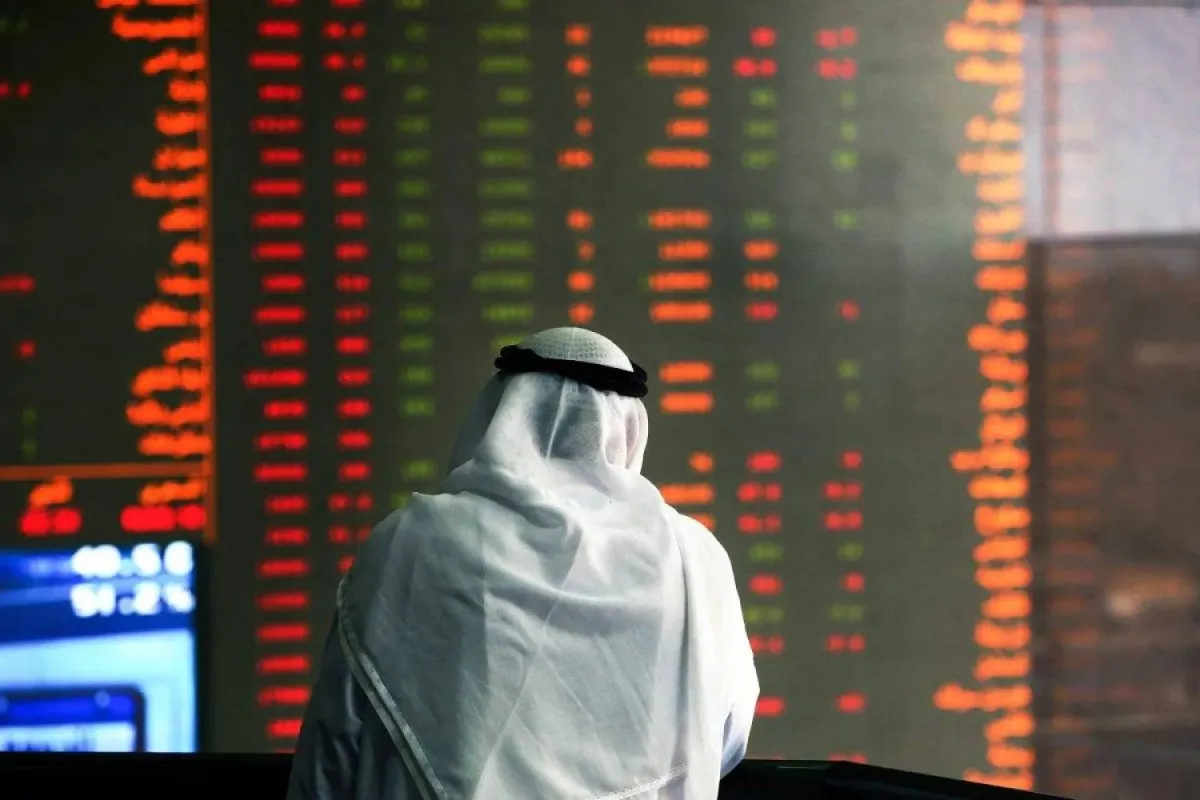
Gulf equity markets suffered another setback on Sunday, 22 November 2026, as renewed security tensions across the Middle East prompted investors to reduce exposure to regional equities. Banking stocks were among the principal contributors to the declines, reflecting the sector's significant weight in Gulf stock indices and its sensitivity to changes in economic confidence.
Saudi Arabia's benchmark Tadawul All Share Index fell approximately 2%, according to Reuters, with Al Rajhi Bank and Saudi National Bank among the major stocks weighing on the market. Qatar's benchmark index declined 1.6%, with losses extending across nearly all constituent companies, while Bahrain's market retreated 0.6%. The selling followed a difficult period for regional equities, already affected by geopolitical uncertainty and concerns about the wider international investment environment.
The immediate catalyst was a further escalation in regional security concerns. Saudi-led forces reported intercepting a missile launched by Iran-aligned Houthi forces, while Bahrain reported Iranian aerial attacks, including an incident that caused a fire at a civilian industrial facility. Separately, Iran claimed that its air defences had damaged a US fighter aircraft over Gulf waters, an assertion denied by Washington. Diplomatic contacts continued, including discussions involving Qatar and Iran, but the combination of military developments and uncertain negotiations kept investors cautious.
For Gulf financial markets, these events are particularly consequential because the region's economic development, investment flows and banking activity remain closely connected to perceptions of political and security stability. Even when there is no immediate evidence of financial losses, uncertainty can influence equity valuations, funding conditions and the willingness of businesses to undertake new investment commitments.
Why Banking Shares Matter Beyond the Stock Market
The decline in major Saudi and Qatari banking shares deserves attention beyond its contribution to the overall market indices. Banks occupy a central position in the Gulf economies, financing corporate investment, infrastructure development, real estate activity and household borrowing. Changes in their market valuations can therefore reflect investor expectations about broader economic conditions, rather than developments affecting individual institutions alone.
Saudi National Bank and Al Rajhi Bank are particularly important in this context because of their scale and influence within the Saudi financial system. A decline in their share prices can have a disproportionate effect on the benchmark index, particularly during periods when international and domestic investors are reducing risk exposure across several sectors simultaneously.
Nevertheless, the relationship between a bank's share price and its underlying financial condition is not straightforward. Equity markets incorporate expectations about future profitability, interest rates, credit growth, risk premiums and investor sentiment. A sharp decline in market capitalisation does not, by itself, establish that a bank has experienced deposit withdrawals, liquidity stress, rising non-performing loans or a deterioration in regulatory capital.
This distinction is essential when assessing the latest market developments. Sunday's trading provides evidence of increased investor caution, but not sufficient grounds to conclude that the financial condition of the affected banks has materially weakened. Any such assessment would require examination of bank-specific financial disclosures, including capital adequacy, liquidity coverage, funding composition, asset quality and expected credit losses.
Geopolitical Risk and the Transmission to Bank Balance Sheets
Although the immediate impact has been most visible in equity prices, a prolonged period of regional instability could create more substantial challenges for financial institutions. The transmission mechanisms would depend on the duration and severity of disruptions, the sectors affected and the capacity of governments and central banks to contain their economic consequences.
One potential channel is corporate credit demand. Businesses may postpone investment decisions when the outlook for regional trade, transportation, energy infrastructure or construction becomes less predictable. For banks, weaker demand for new financing could moderate loan growth, while delays affecting existing projects may require adjustments to repayment schedules or additional working capital facilities.
Another channel involves funding costs. Gulf banks operate in financial systems with substantial links to international capital markets, and many regional currencies are pegged to the US dollar. Changes in global interest rate expectations and risk premiums can therefore affect the cost of wholesale funding, even where domestic deposit bases remain relatively stable. The impact varies considerably between institutions, depending on their funding structures, liquidity buffers and access to alternative sources of financing.
Credit quality is a further consideration, although any deterioration would generally become apparent over a longer period than the immediate reaction in equity markets. Borrowers exposed to disrupted supply chains, delayed infrastructure projects or weaker consumer and business confidence could experience pressure on cash flows. The extent of that pressure would depend on their financial resilience and the effectiveness of existing credit protections.
These are potential risk channels, not confirmed consequences of Sunday's market decline. At present, the available reporting supports an assessment of heightened market uncertainty rather than evidence of a systemic banking problem.
Oil Prices Provide Support, but Cannot Eliminate Financial Market Risk
The relationship between geopolitical tensions and oil prices adds another dimension to the current environment. Higher energy prices can support fiscal revenues and external balances in major Gulf-producing economies, potentially providing governments with additional financial capacity during periods of uncertainty.
However, the relationship is not uniformly positive. Security incidents involving shipping routes, industrial facilities or energy infrastructure can simultaneously raise commodity prices and increase operational risks for businesses. Higher oil revenues may support public finances, but they do not automatically offset the consequences of disrupted trade, more expensive financing or postponed private-sector investment.
The recent market reaction illustrates this distinction. Reuters reported that relatively steady oil prices provided some support to Saudi equities, but were insufficient to prevent a substantial decline in the broader market. Investors were therefore assessing more than the immediate direction of energy prices.
For banks, the relevant consideration is the net effect on their customers and operating environment. Government-related spending, corporate activity, funding conditions and asset quality may respond differently to the same geopolitical developments. Treating higher oil prices as an automatic safeguard against banking-sector risk would overlook those differences.
What Investors and Credit Risk Managers Should Monitor
The next phase will depend on whether the latest security incidents remain isolated or develop into more persistent disruptions. Equity markets may recover quickly if tensions ease, but a sustained deterioration in confidence could have wider implications for capital flows and corporate financing activity.
For banking-sector analysis, several indicators deserve particular attention: movements in bank funding spreads, changes in deposit growth, the pricing of new corporate loans, the performance of borrowers exposed to regional trade and infrastructure, and any material revisions to expected credit loss assumptions. These measures would provide more direct evidence of changing financial conditions than share prices alone.
The regional dimension also matters. Saudi Arabia, Qatar, Bahrain and the United Arab Emirates have different economic structures, banking-sector concentrations and fiscal capacities. A common geopolitical shock does not necessarily produce identical financial outcomes across their banking systems. Country-specific analysis remains essential, particularly when evaluating banks with different levels of exposure to real estate, government-related entities, construction and international financing markets.
Sunday's sell-off is therefore best understood as a repricing of uncertainty rather than a demonstrated deterioration in bank fundamentals. It shows how quickly geopolitical developments can influence investor confidence in institutions that remain central to the region's economic growth.
For Gulf banks, the more important question is whether today's equity-market pressure remains a temporary valuation adjustment or begins to affect funding conditions, credit demand and the financial performance of borrowers. The available evidence does not yet establish the latter, but it makes those indicators increasingly important to monitor.
Editorial Disclaimer
This article is based on publicly available market information and attributed news reporting as at 22 November 2026. The discussion of possible effects on bank funding, credit growth and asset quality represents an assessment of potential transmission channels, not a forecast or evidence that any named institution is experiencing financial distress. No allegation of misconduct or regulatory non-compliance is made.
This publication provides independent financial analysis and does not constitute investment advice. As at the publication date, the author holds no direct or indirect financial interests in the banks discussed in this article.
Sources and References
1. Reuters, 22 November 2026. Most Gulf Bourses Retreat as Regional Flare-Ups Continue. Primary reporting on Sunday's market declines and regional security developments.
https://www.reuters.com/world/middle-east/most-gulf-bourses-retreat-sporadic-attacks-continue-2026-11-22/
2. Reuters, 19 November 2026. Most Gulf Stocks Retreat on Iran Strife; Traders Eye Fed Signals. Background on recent regional market performance, banking shares and monetary policy expectations.
https://www.brecorder.com/news/40449751/most-gulf-stocks-retreat-on-iran-strife-traders-eye-fed-signals
3. Reuters, 20 November 2026. Abu Dhabi Index Dips as Oil Slides on Ample Supply. Background on UAE equity performance, First Abu Dhabi Bank and oil market developments.
https://www.reuters.com/world/middle-east/abu-dhabi-index-dips-oil-slides-ample-supply-2026-11-20/
4. Aljazira Capital, 22 November 2026. Daily Market Report. Regional equity market indicators and commodity market context.
https://www.aljaziracapital.com.sa/media/rwcpjt1u/daily-sun-22-11-2026-en.pdf