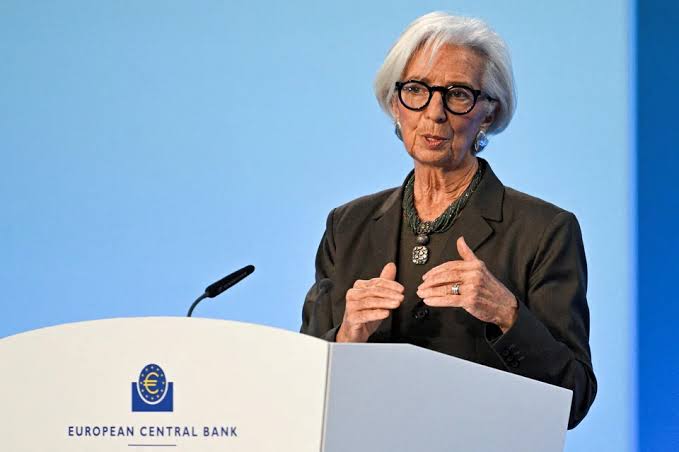
European Central Bank President Christine Lagarde has warned that cyberattacks enhanced by increasingly capable artificial intelligence systems represent one of the most serious emerging threats to financial stability.
Speaking at the European Banking Congress in Frankfurt on 20 November, Lagarde expressed concern that the combination of AI technology and malicious cyber activity could create risks that financial institutions and policymakers have not yet adequately addressed.
The warning reflects the growing complexity of financial sector technology infrastructure and the potential for cyber incidents to affect institutions beyond the immediate target of an attack.
Banks increasingly depend on interconnected payment systems, cloud infrastructure, outsourced technology providers and automated decision-making tools.
A disruption involving one critical service provider could therefore affect multiple financial institutions simultaneously, even where those institutions maintain separate internal control systems.
AI technology may further complicate the threat environment by increasing the sophistication, speed and adaptability of malicious activity.
For banking supervisors, the challenge extends beyond preventing individual security breaches. It includes ensuring that institutions can maintain critical services, recover from operational disruption and identify dependencies that could transmit problems across the financial system.
The issue is particularly relevant to the European Union's Digital Operational Resilience Act, which establishes requirements for information and communications technology risk management, incident reporting, resilience testing and third-party risk oversight.
However, compliance with formal regulatory requirements does not necessarily establish that an institution can withstand every plausible cyber scenario.
For banks, effective resilience requires management accountability, credible recovery arrangements, testing of operational dependencies and coordination with external infrastructure providers.
The ECB President also highlighted the difficulty of identifying the perpetrators of sophisticated attacks, particularly where cyber activity involves anonymous actors or potential state-linked support.
Lagarde's comments do not constitute a new regulatory measure or a finding that a specific European bank has suffered a material incident.
They do, however, indicate that cyber resilience is likely to remain a prominent supervisory and financial stability priority.