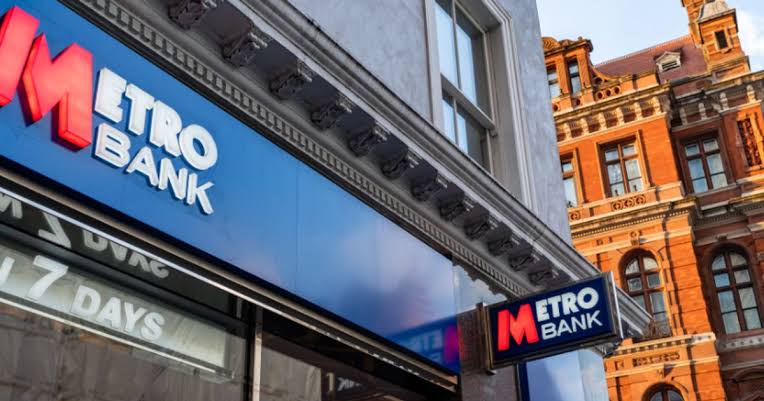
Metro Bank has attracted preliminary takeover interest from Barclays and private equity investors Lone Star Funds and Centerbridge Partners, according to a Bloomberg report cited by Reuters on 20 November 2026. The development comes just over a week after the British challenger bank announced a formal review of its strategic options, including a possible sale of the business.
The emergence of potential buyers represents an important development in Metro Bank's restructuring and recovery strategy. Founded in 2010 as one of Britain's first new high-street banking entrants in more than a century, Metro Bank sought to challenge established lenders through branch-led customer service and a differentiated retail banking proposition.
Its subsequent development has been considerably more difficult. Regulatory capital problems, governance concerns and funding pressures forced the institution to undertake substantial changes to its business model.
In 2023, the bank secured a major recapitalisation involving Colombian billionaire Jaime Gilinski Bacal, who subsequently emerged as its controlling shareholder. The transaction provided financial support at a critical point in the bank's development but also fundamentally altered its ownership structure.
Metro Bank's strategic review, announced on 12 November, involves Morgan Stanley as financial adviser. At that stage, the bank stated that it was not engaged in active discussions with potential bidders and had received no formal offer.
The interest attributed to Barclays would be particularly significant. An acquisition by an established domestic banking group could offer potential operating efficiencies through the rationalisation of technology infrastructure, funding arrangements, administrative functions and parts of the branch network.
Private equity ownership would present a different strategic proposition. Investors such as Lone Star and Centerbridge have experience in financial services, credit portfolios and operationally complex transactions. However, any acquisition would still require a credible long-term strategy, adequate regulatory capital and supervisory approval.
The possibility of a transaction also raises questions about the valuation of Metro Bank's franchise. Its deposit base, lending operations and customer relationships have strategic value, but potential acquirers would need to assess the sustainability of earnings, funding costs, credit quality and the expenditure necessary to support future growth.
For the wider UK banking sector, the sale process may provide an indication of whether smaller challenger banks can achieve sustainable independence or whether consolidation offers a more attractive route to profitability.
No binding offer or completed transaction had been announced as of 20 November. The identities of potential bidders remain based on media reporting rather than confirmed acquisition proposals.